
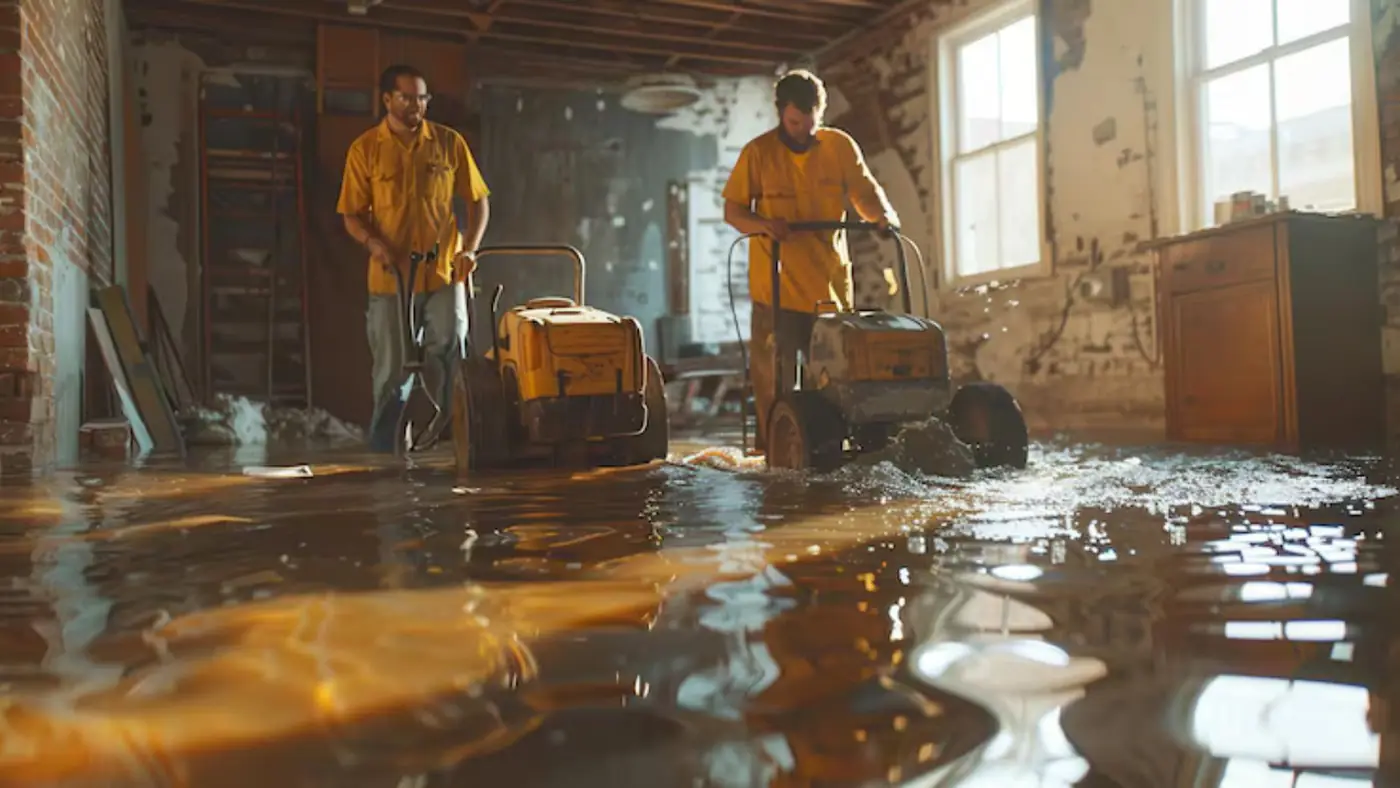
Water damage restoration is the work of stopping the damage from unwanted water, removing the water and wet materials, drying the structure and rebuilding what could not be saved. In Broomfield, CO the same words get used for very different jobs, from a wet bathroom floor to a flooded basement. The steps stay in the same order either way.
Short answer: restoration has two halves. The first is emergency drying, often called mitigation, and the second is the repair that puts the finishes back. Skipping or rushing the first half is what makes the second half bigger.
The sequenceThe Work in the Order It Happens
Stop the water
Someone closes a valve, repairs a line or shuts off the main. Nothing else works until the water stops.
Assess and classify
Moisture meters and thermal imaging show where water traveled. The job is sorted by water category (1 to 3) and damage class (1 to 4) under the ANSI/IICRC S500 standard.
Extract and remove
Extraction units pull standing water. Materials that cannot be dried or cleaned, such as soaked pad or sewage-touched drywall, come out.
Dry and monitor
Air movers and LGR dehumidifiers dry the structure while repeat readings confirm the numbers are falling.
Clean and treat
Surfaces are cleaned, and affected areas are checked for odor or growth before anything is closed up.
Rebuild
Drywall, insulation, flooring, trim and paint go back once the structure reads dry.
Most of the first five items fall under water mitigation and the sixth under water damage repair. Some companies do both and some do one. Ask any company whether its crews work to S500, since that is the published standard for this trade.
Common Sources and What They Mean for the Job
Supply line or appliance hose
Often clean water at first. Speed matters because the water travels into walls and under floors out of sight.
Burst pipe in a cold snap
Can release a lot of water quickly, so the main shutoff is the first move and extraction usually follows.
Roof or ceiling leak
Water wets insulation and drywall above the room, and the stain you see can understate what is wet.
Sewer backup or floodwater
Treated as contaminated. Porous materials usually come out, and safety steps come before cleanup.
Why the Category of Water Matters
Category 1 water comes from a clean source, such as a broken supply line. Category 2 carries contamination, such as dishwasher or washer discharge. Category 3 is grossly contaminated and includes sewage and floodwater.
The category decides what can be dried and what must be thrown away. Porous materials touched by sewage, for example, are usually removed rather than saved. A clean-water leak that sits long enough can also worsen in category, which is one more reason to start early.
Not sure what kind of job you have?
Describe what happened and we will tell you what the first steps would be.
Who Does What After a Leak
| Who | What they handle | What they do not |
|---|---|---|
| City water and sewer department | The public water main, sewer main and stormwater system | Plumbing and appliances inside your home |
| You, the property owner | Shutting off water, keeping photos and receipts, calling your insurer | Deciding alone whether a wall is dry |
| Plumber | Repairing the broken pipe, valve, fixture or drain line | Drying the structure afterward |
| Restoration company | Extraction, drying, monitoring, cleaning and rebuild scope | Fixing plumbing or deciding what your policy pays |
| Insurer | Reviewing the claim against your policy | Telling you how to dry your house |
Roles overlap at the edges, so ask each party where its work starts and stops.
Broomfield note: City Main or Your Own Line?
The City and County of Broomfield Water Utilities and Services Department runs drinking water, wastewater and stormwater. It keeps an after-hours emergency line for urgent problems, and non-urgent concerns go through the city's online Submit a Water/Sewer Concern form. If water is bubbling up in the street or the problem looks like it is in a city main, call the city first.
The city's wastewater page calls the service lines that connect a building's plumbing to the city sewer Property Service Connections. The page does not say who pays for a backup, so ask the city and ask your insurer before you hire anyone to dig or repair that line. A plumber can tell you whether the blockage is inside the house or out in the connection, and that answer shapes who you call next.
Sewage or electrical risk
If sewage is involved, or water has touched outlets, appliances or a panel, any electrical or gas risk goes to the utility or 911 ahead of the restoration line. Keep children and pets out of the area.
What Happens When Drying Waits
Wet drywall, insulation and wood do not stay in the same condition for long. Materials that could have been dried on day one may need to be replaced later, and damp, closed-up spaces invite growth. That is why the early steps carry so much weight.
You do not need to know what to do with every material. You need to stop the water, take photos and call someone who will measure before deciding. The rest follows from the readings.
Where Restoration Stops
Restoration does not include plumbing or basement waterproofing. A company that dries your home cannot stop a pipe from failing again, so the repair of the source belongs to a plumber. A mold test is no stand-in for fixing moisture either, since growth returns wherever the damp stays.
Permits, Paperwork and Photos
The city's Building Division handles permits for drywall and flood repairs. Raise it with the division before the rebuild begins, so the scope and the paperwork agree.
Photograph the damage before anything is removed, and keep a list of what was wet. Your insurer may ask for both. Insurers often treat a burst differently from a slow leak, and flood usually sits outside standard coverage, so read your policy and ask what applies.
Calling a Restoration Company
A good first call is short and specific. Tell the company what the water touched, how long it has been there and whether anyone has turned off the source. These questions help you compare scopes fairly.
- Ask for the scope and price to be explained before work starts.
- Ask whether the crew works to ANSI/IICRC S500 for water and S520 for mold.
- Ask which readings they will take and how often they will repeat them.
- Ask what falls to a plumber or your insurer and what falls to them.
We are licensed and insured, and we answer the 24/7 line at (303) 952-8295 for homes in ZIP codes 80020, 80021 and 80023. If water has already spread, our emergency water removal crews start with extraction. We also work in Westminster and Erie when a job calls for it.
Not quite. Restoration is the whole process, and repair is the rebuild at the end. The drying must come first, or the new materials sit on wet framing.
For a very small, clean-water spill, fans and ventilation may be enough. Anything that soaked into walls, subfloor or insulation needs meters to confirm it is dry. Surface dryness is not proof.
Category 1 is clean source water, category 2 carries contamination and category 3 is grossly contaminated, such as sewage or floodwater. They come from the ANSI/IICRC S500 standard. The category sets what can be saved.
Call the city's after-hours emergency line for an urgent problem, or use the online Submit a Water/Sewer Concern form for non-urgent ones. The line between your building and the sewer is a Property Service Connection, and the city's page does not say who pays for a backup. Ask the city and your insurer.
Drywall and flood repairs are among the work that needs permits. Ask the Building Division before the rebuild starts what applies to your scope.
Water or mold in your home right now?
Call the 24/7 line and describe what you see. We explain scope and price before work starts.