
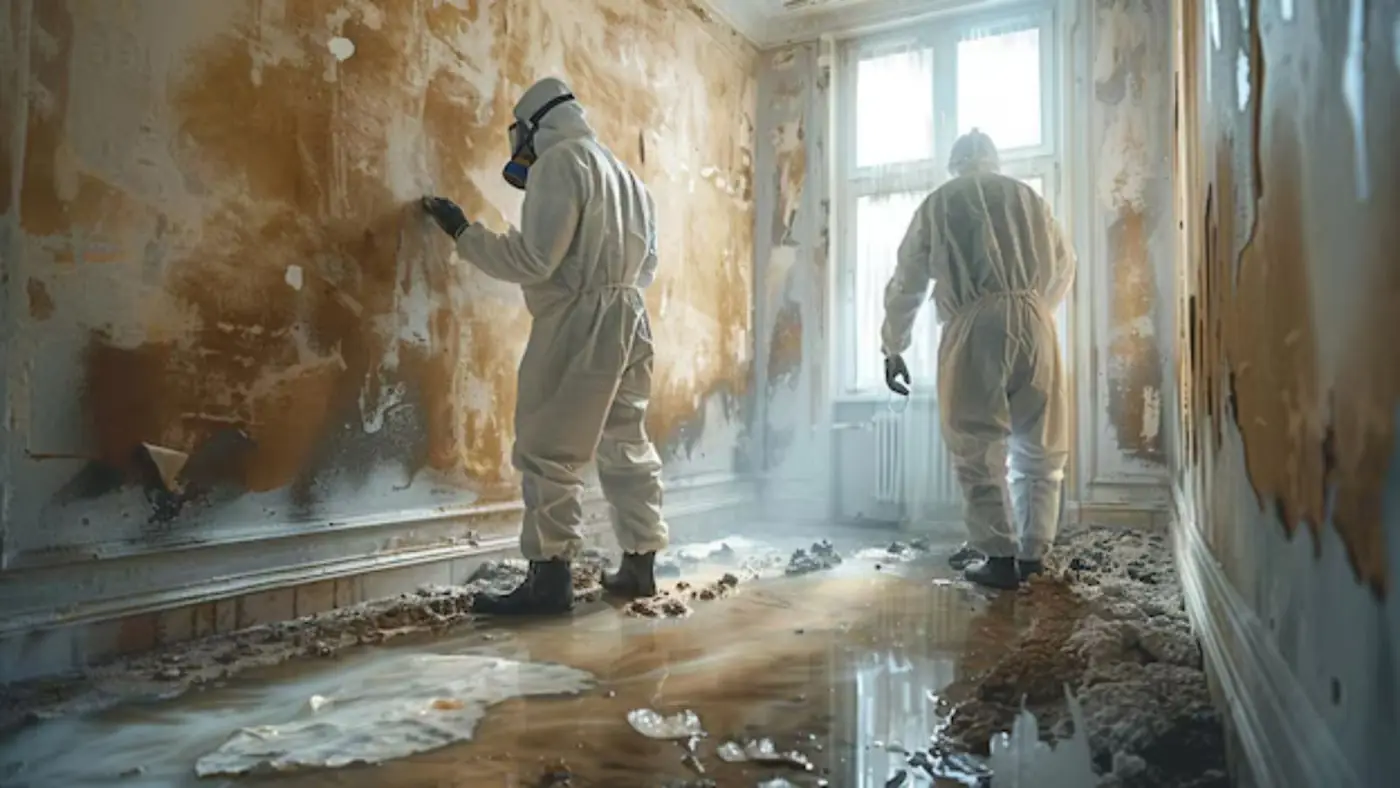
Musty Smell, Dark Spots or a Stained Ceiling? Start With the Moisture
A musty smell in a closet, dark spots on a bathroom ceiling or fuzzy growth behind a pulled-out sofa usually means moisture has been there for a while. The trade name for fixing that is mold remediation, and it always begins with the water source.
Mold needs moisture to grow, so removing growth without fixing the leak only brings it back. Call and describe what you see, and we will explain what to check first.
What Mold Remediation Means in Broomfield, CO
Mold remediation is the controlled removal and cleaning of mold, with the moisture problem corrected. The ANSI/IICRC S520 standard is the published industry reference for mold remediation, and you can ask any company whether its crews work to it.
In practice the job has five parts: stop and fix the water source, contain the affected area, remove materials that cannot be cleaned, clean and dry what remains, and confirm the result. If the problem began with a leak, water mitigation is often part of the same project.
Where Mold Shows Up After a Leak
Bathrooms
Corners of ceilings above showers, around exhaust fans and behind toilets where condensation or a slow supply leak collects.
Closets
Exterior walls and closets under bathrooms, where a leak above or an air conditioner condensate line can wet drywall unnoticed.
Under sinks
A weeping drain or supply fitting soaks the cabinet base and the wall behind it.
Basement ceilings
An upstairs toilet or tub leak can run through a finished ceiling long before a stain shows.
Roof and siding leaks
Water that enters at a roof edge or a siding gap runs down inside a wall.
Behind furniture and carpet
Poor airflow and a damp edge hold moisture. Pulling carpet back can reveal growth under the pad.
Mold After Water Damage
Mold becomes a risk when wet materials stay wet. Fast drying is the best prevention, which is why water damage cleanup and structural drying matter so much in the first days after a leak.
If materials were wet for several days, or a musty smell shows up after drying, a moisture meter and a visual check behind baseboards and under flooring tell the crew whether growth has started. We then separate what can be cleaned from what must be removed.
Hidden growth inside a wall is common after a slow leak. Opening a small inspection area is often the only way to learn the true extent.
Mold Removal and Black Mold Cleanup
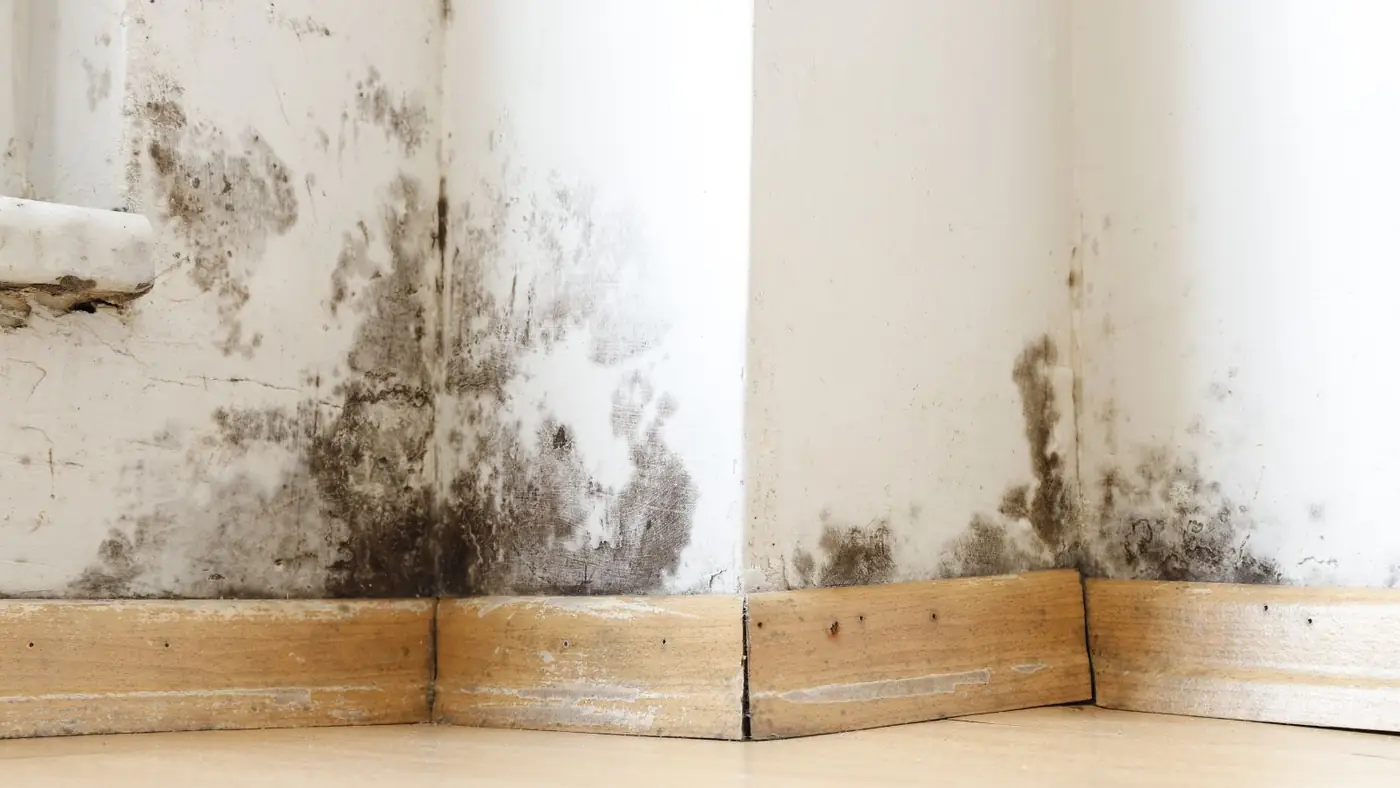
Black mold is a common name for mold that looks dark. Color does not tell you the species, and the CDC says identifying the species is not necessary because mold found in buildings is handled the same way, by removal and by fixing the moisture. Treat dark growth the same as any other mold.
For small areas, the EPA gives a guideline of about 10 square feet as a rough limit for a homeowner cleaning job. It advises scrubbing hard surfaces with detergent and water, drying completely and discarding porous materials such as ceiling tiles and carpet that have mold growth. Larger or hidden growth, mold after sewage or flood water, or mold in an HVAC system is a job for professionals.
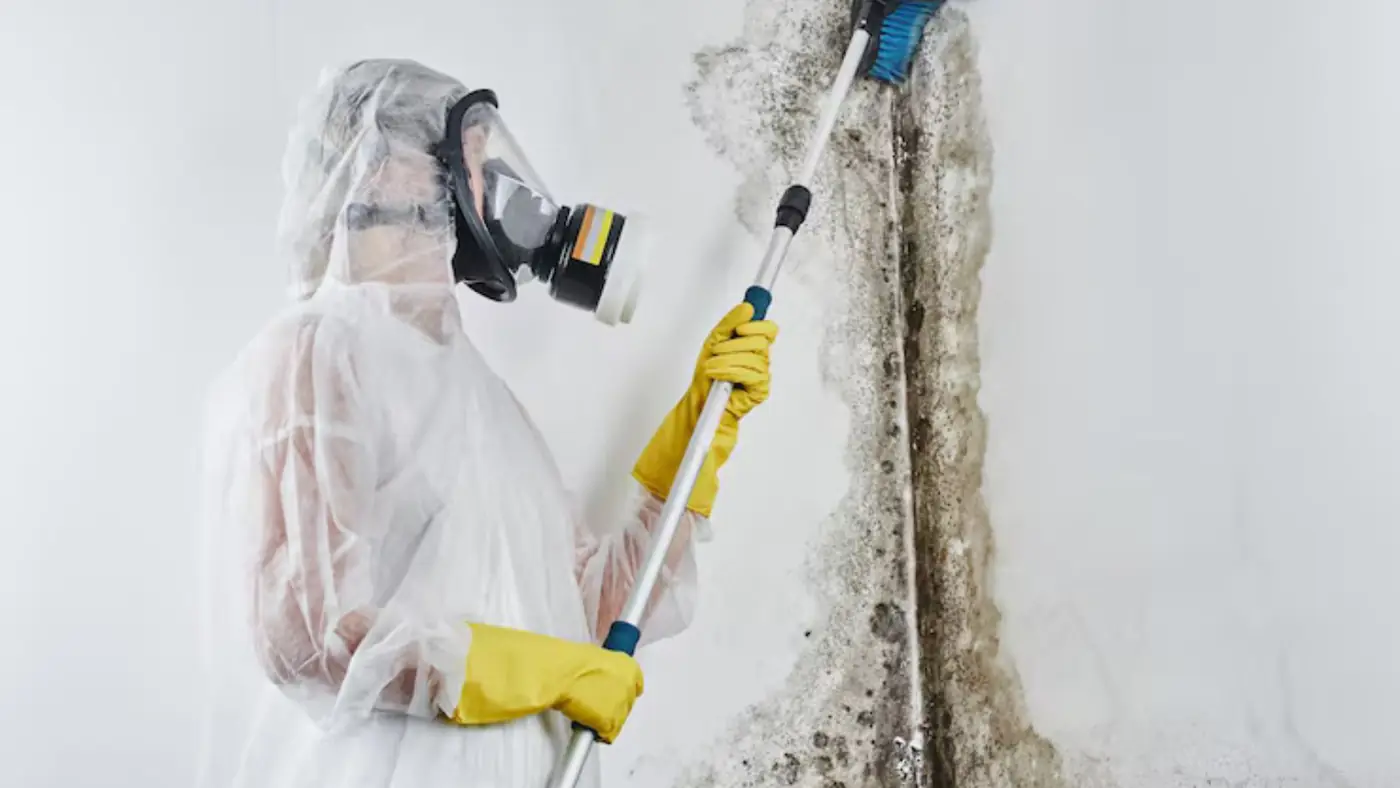
Professionals use containment barriers, negative air machines with HEPA filtration, protective gear and careful removal so spores are not spread to clean rooms. Health questions belong to your physician.
| Condition | What it means in S520 | Typical response |
|---|---|---|
| Condition 1 | Normal fungal ecology, no growth or settled spores beyond normal | No remediation needed |
| Condition 2 | Settled spores from a nearby source | Cleaning, plus fixing the source |
| Condition 3 | Actual growth | Containment, removal and cleaning |
Condition descriptions are paraphrased from the ANSI/IICRC S520 standard.
Need someone to look at it?
Call and describe the location and the leak history. We explain the inspection and how scope and price are set before any work starts.
Testing, Inspection and Clearance
Many callers ask whether they need testing. A visual inspection with a moisture meter often shows what is wet and where growth is. Testing can document conditions, but it does not replace fixing the moisture, and results should be interpreted by the person who collects the samples.
Clearance testing is a separate step after remediation, done to confirm the area is clean. It is best performed by an independent assessor who has no stake in the removal work. Ask your remediator how they handle this, and ask whether your state licenses mold assessors and remediators, since rules differ by state.
If you are buying or selling a home and a lender or buyer wants mold addressed before closing, share the report and the remediation scope with your agent. Whether a lender accepts the documentation is its own decision, so confirm with the lender directly.
What drives the numberCost Factors for Mold Remediation
| Factor | Why it matters |
|---|---|
| Affected area | Square footage of growth and of wet materials sets labor and containment size. |
| Materials involved | Drywall and ceiling tile are removed. Wood framing is usually cleaned. |
| Containment and air filtration | Larger or hidden growth needs barriers and negative air equipment. |
| Drying days and equipment | The area must dry before repair, and the source of moisture must be fixed. |
| Testing and rebuild | Independent testing and the repair afterward are separate line items. |
Want your real number? Call (303) 952-8295.
Insurance note
Mold that follows a sudden and accidental leak is sometimes covered and mold that follows long-term neglect often is not. Policies differ a great deal, and some limit mold coverage. Check your policy or ask your insurer how it treats mold, and document the leak and the damage with photos.
Do not assume your claim will be accepted, and confirm what your insurer needs before work starts.
We handle mold remediation across Broomfield ZIP codes 80020, 80021 and 80023, and in nearby Westminster and Lafayette. When mold follows flooding, flood damage restoration covers the water side, and water damage repair rebuilds after clearance.
Mold Remediation Questions
Not always. A visual inspection and moisture meter readings often show what is wet and where growth is. Testing can add documentation, and clearance testing after remediation is best done by an independent assessor.
Surface wiping may clean a small area, but removing growth is not enough on its own. The moisture source has to be fixed and porous materials with growth are usually removed. For bigger areas, call a professional.
A lender or buyer can ask for documentation before a sale or loan closes. Share the inspection report and remediation scope with your agent, and confirm requirements with the lender, because acceptance is its own decision.
Ask whether your state licenses mold assessors and remediators and ask any company for proof of what it holds. Rules differ by state and can change, so confirm with the state agency before you hire.
A musty smell means moisture is present and growth is possible. A moisture meter and an inspection behind baseboards, under flooring and inside closets will show whether materials are wet or growth is present.