
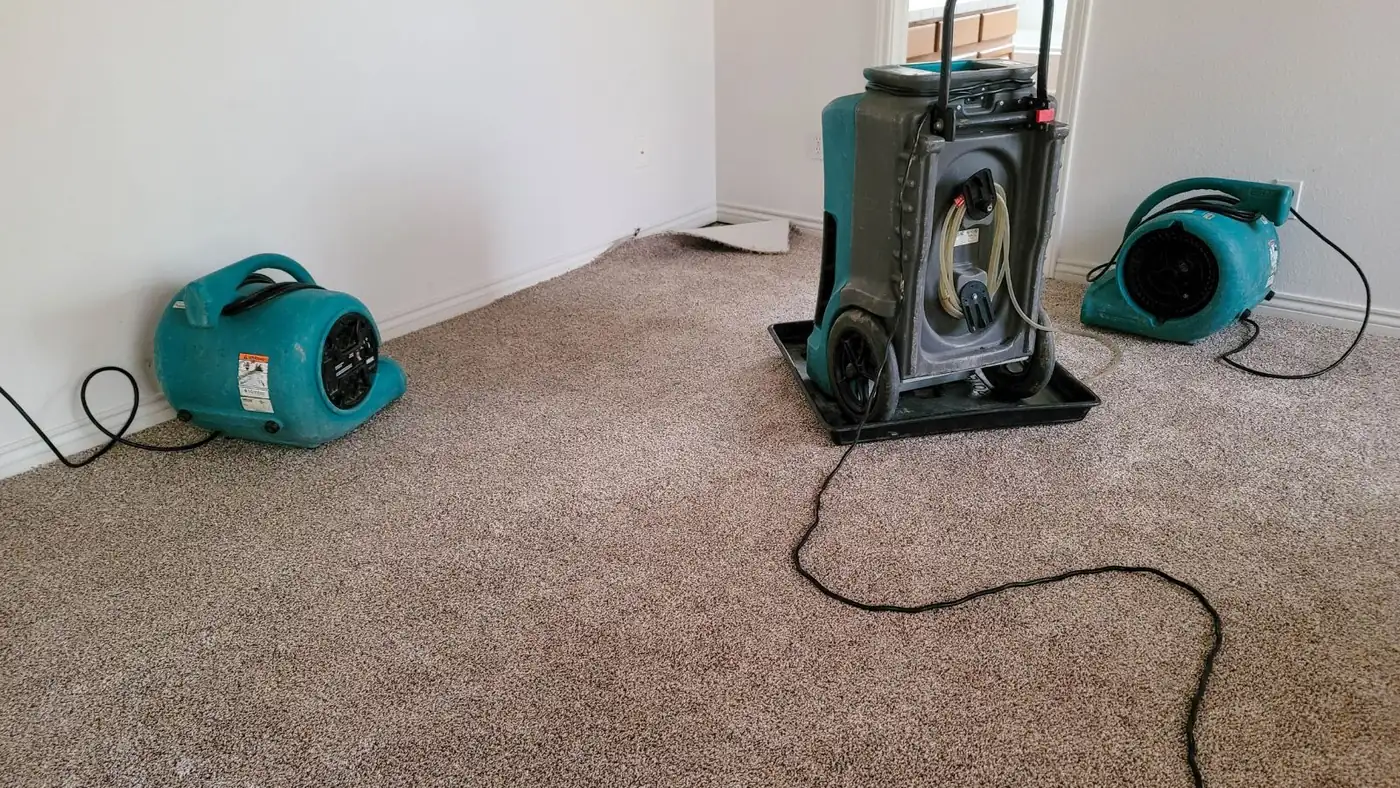
Wet Carpet, Soft Walls or a Musty Smell? That Is a Mitigation Call
If the carpet squishes, a wall feels soft, paint is bubbling or a room smells musty after a leak, water is still inside your materials. The trade name for stopping that damage is water mitigation, and the first days decide how much needs to be rebuilt.
Our 24/7 line is open now, and a quick call can save materials that would be lost by waiting a week.
What Emergency Water Mitigation Means in Broomfield, CO
Water mitigation is the work done in roughly the first 24 to 72 hours to stop water damage from spreading. It starts with finding and stopping the source, then removing standing water, mapping moisture and starting structural drying.
It is different from repair, which rebuilds after the structure is dry, and different from cleanup, which removes and sanitizes affected materials. Mitigation is the part that protects what can still be saved.
Stop the source
Close the fixture shut-off or the main water valve if the supply line is leaking.
Cut power safely
Turn off power to wet areas only if you can reach the panel dry. Otherwise call the utility.
Lift and protect
Raise furniture, rugs and valuables onto blocks or off the floor and keep people and pets out.
Photograph it
Take photos and video of the damage before anything is moved, for your insurer.
How Mitigation Works, Step by Step
Source and safety
Identify the water source and category, check for electrical risk and set up protection.
Extraction
Remove standing water with pumps and extraction units, since evaporation alone is slow and puts moisture into the air.
Moisture mapping
Moisture meters and thermal imaging trace water into walls, subfloors and ceilings so drying is aimed at the real wet areas.
Drying setup
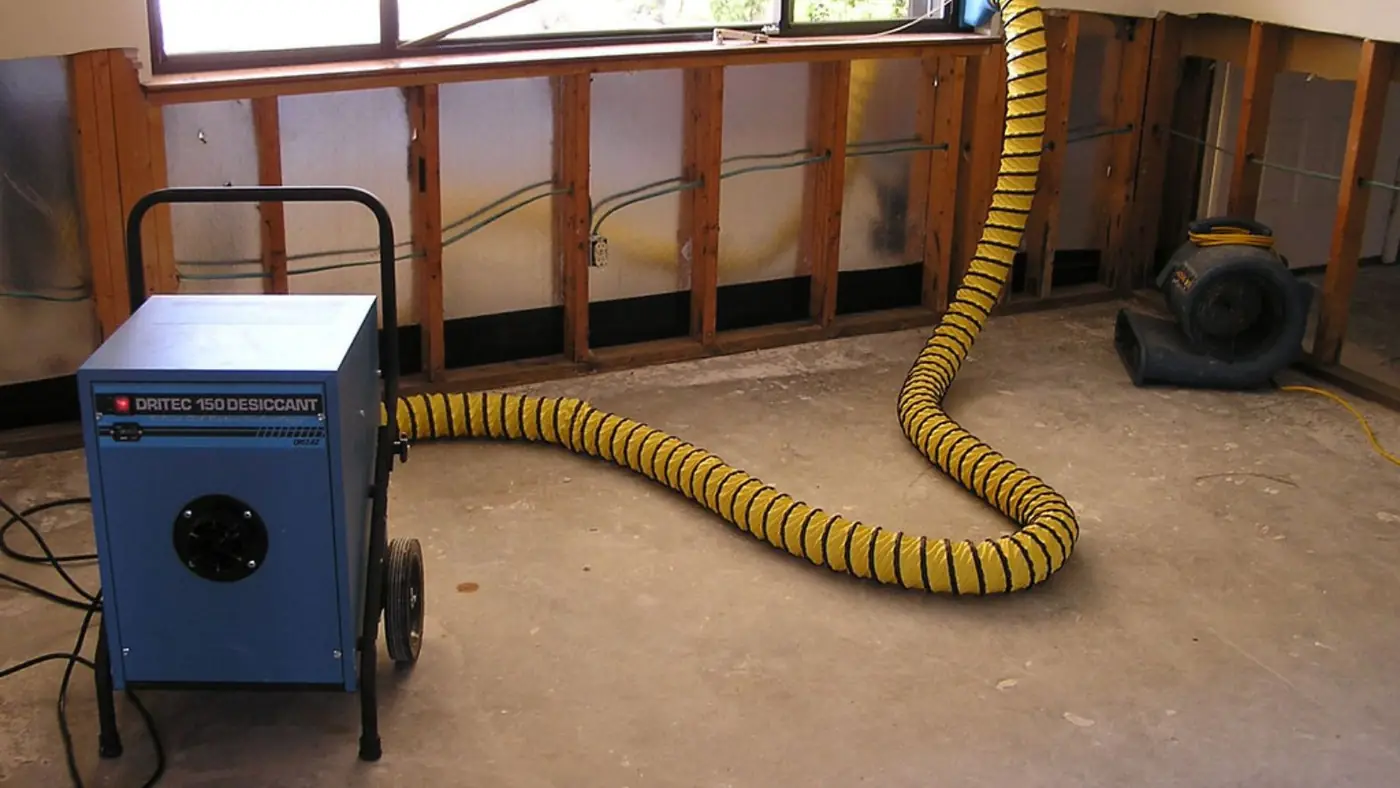
Air movers and LGR dehumidifiers go in, and readings are logged daily until the structure reaches its dry standard.
Structural Drying
Structural drying is the equipment phase of mitigation. Air movers push dry air across wet surfaces, and low grain refrigerant (LGR) dehumidifiers pull moisture out of the air so it does not settle back into the materials. Moisture meters guide how many machines run and for how long.
Drying time depends on the materials and how much water they absorbed, so it can be a few days or longer. Hardwood, plaster and thick insulation hold water longer than carpet. The crew checks readings on every visit and removes equipment only when the numbers say the structure is dry.
Cold Colorado air matters here, because Denver-area records show the first freeze arriving around early October and the last in early May. A house with the heat turned down during a freeze can have a leak and a slow dry at the same time, so crews measure rather than guess.
| Question | Mitigation | Restoration or repair |
|---|---|---|
| Main goal | Stop spread, save materials | Rebuild what was removed |
| Typical window | First 24 to 72 hours, then drying days | After the structure reads dry |
| Main tools | Pumps, extraction, air movers, dehumidifiers, moisture meters | Drywall, flooring, paint, carpentry |
| Paperwork | Moisture logs, photos and equipment records | Scope of rebuild and materials |
Keep the moisture logs and photos. Your adjuster may ask for them.
Wet materials today?
Call the 24/7 line and we will explain the scope and how it is priced before any work starts.
Cost Factors for Water Mitigation
| Factor | Why it matters |
|---|---|
| Water category | Clean, gray or contaminated water changes what can be dried and what must be removed. |
| Affected area | More wet rooms and taller wet walls need more extraction and more equipment. |
| Materials involved | Hardwood, plaster and insulation hold water longer than carpet. |
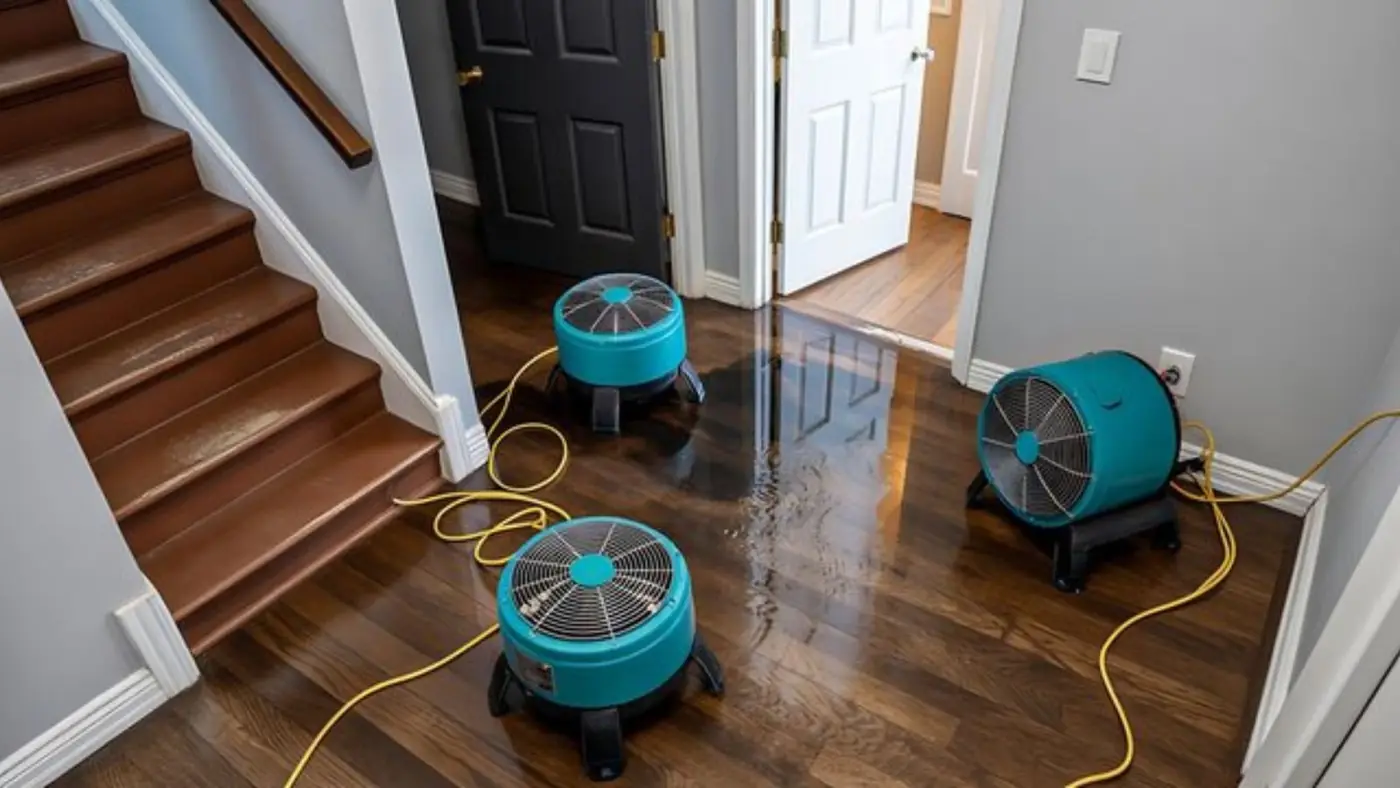
| Drying days and equipment | Machine count and days on site depend on the readings. |
| Follow-on repair | Anything removed during mitigation becomes part of the rebuild scope. |
Want your real number? Call (303) 952-8295.
Insurance note
Mitigation records are the documentation your insurer will look at first. Sudden and accidental water damage is often covered, gradual leaks often are not, and flood damage is usually excluded without separate flood coverage. Ask your insurer how your loss is classified and keep every log and photo.
Early mitigation also helps limit the damage that is claimed, which matters under most policies.
Mitigation Across Broomfield and Nearby Towns
We respond in Broomfield ZIP codes 80020, 80021 and 80023, including the Interlocken business park, the Anthem and Arista areas and the older streets near Broomfield Heights. Nearby, Westminster and Louisville homes get the same process.
If the water came from a burst pipe, see emergency water removal. If it came from storm or sewer flooding, flood damage restoration covers that case. If a musty smell has already appeared, mold remediation explains the next step.
The Standard Behind the Work
Professional drying is described in ANSI/IICRC S500, the published standard for water damage restoration. Ask any company whether its crews work to it, and ask how drying will be confirmed. A dry reading, not a calendar day, decides when equipment comes out.
Common Mitigation Questions
Yes. The line is staffed 24 hours a day, including nights, weekends and holidays. Call, describe what you see and we will talk through safe steps while a crew is arranged.
Mitigation stops the damage and dries the structure in the first days. Restoration is the rebuild that follows once the structure is dry. They are often done by the same company but are priced and documented separately.
It depends on the materials and the amount of water, so it can range from a few days to longer. The crew logs moisture readings each visit and removes equipment only when the structure reaches its dry standard.
Equipment alone does not tell you where the water went. Without moisture mapping, rented machines often dry the surface while a wall cavity stays wet. Call and we will explain what your situation needs.
If a musty smell or stain is still present, materials may hold moisture. Meter readings answer the question quickly, and the answer decides whether you need drying, mold work or only repair.