
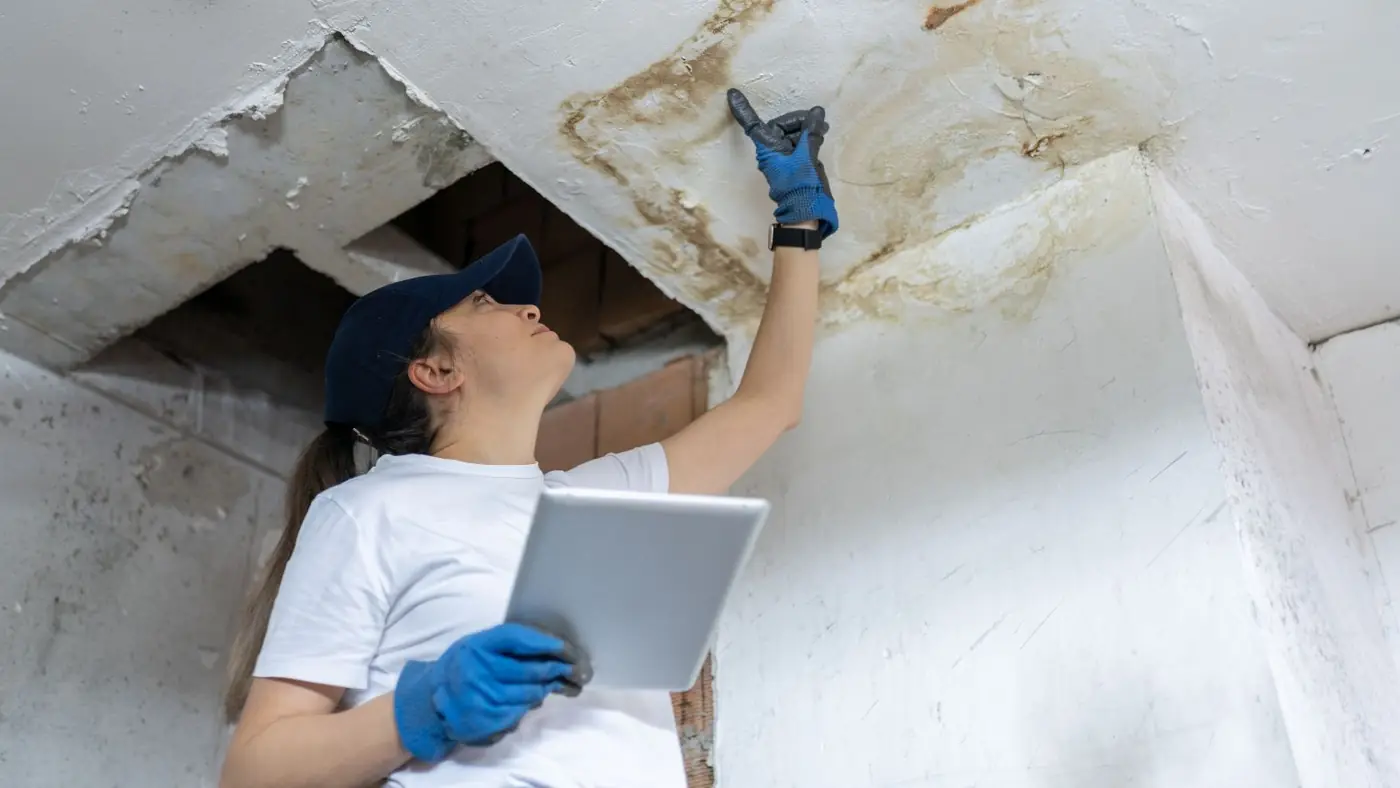
The signs of ceiling water damage in Broomfield, CO are brown or yellow stains, sagging drywall, bubbling paint, drips and a musty smell. Each one tells you that water has reached the ceiling layer and may still be arriving. A ceiling that is wet, bulging or near a light fixture is urgent. A dry, faded stain can wait a few days for a proper look.
Short answer
If the ceiling is sagging, dripping or has a fixture in the wet area, keep people out from under it and deal with electrical risk first. If it is only stained and feels dry, find the source before anyone paints.
Six Signs That Water Is in Your Ceiling
Ceilings hide water well. Drywall soaks it up, insulation holds it, and the stain on the surface is often much smaller than the wet area above it.
Stains with a ring
Yellow or brown patches, often with a darker edge, mean water has travelled through the board and dried at the rim. A new ring around an old stain means the leak came back.
Sagging or bulging
Wet drywall loses strength and bellies downward. A bulge can hold a surprising amount of water, so treat it as a hazard until it is released safely.
Bubbling or peeling paint
Paint lifts when moisture pushes from behind. Soft blisters that feel damp are a sign of an active source, not an old one.
Drips and beading
Drops at a seam, a vent or around a recessed light show where water has found a path out. Place a bucket, then look upstairs or in the attic.
Musty smell
A damp, earthy odor in a room with no visible stain can mean wet insulation or drywall above. Smell is a clue to measure, not a verdict.
Spots near fixtures
Dark marks around a light, fan or smoke detector deserve extra care because water and wiring share the same cavity.
Your First 24 Hours, in Order
The goal on day one is to stop more water from arriving and to limit what the wet area can ruin. You do not need tools beyond a bucket, a camera and the shutoff valve you already own.
Make the room safe
Move people and pets out from under the damaged area. Stay clear of any ceiling that is visibly bowed.
Stop the supply
If a pipe, toilet or tub is the likely source, close its shutoff or the main valve. If rain or snowmelt is the source, you cannot stop it, so move to containment.
Catch and protect
Set buckets under drips and move furniture, rugs and electronics aside. Cover what cannot move with plastic.
Photograph everything
Take wide and close photos of the stain, the room and any damaged belongings before anything is touched. Note the date and when you first saw it.
Call for a moisture check
A restoration crew can map the wet area with a moisture meter and thermal imaging and start drying. Call (303) 952-8295 and describe what you see.
Electrical or gas risk comes first
If water is dripping from a light fixture, fan or outlet, or you smell gas, leave the area and do not touch switches. Turn off power at the panel only if you can reach it dry and safely. Electrical or gas danger goes to 911 or your utility, and the restoration line comes after that.
Is the Water Clean? Why It Matters for the Ceiling
Broomfield's drinking water comes from Denver Water plus Colorado-Big Thompson and Windy Gap supplies treated at the city's own plant. The city's water quality report and FAQ say home treatment is not needed for health reasons. That speaks to the water at your tap, not to what a leak has touched on its way down through the ceiling.
A fresh supply line leak starts as clean water, but it picks up dust, insulation fibers and anything in the cavity. Water that came from a roof, a drain line or a toilet is a different matter. Tell the crew where you think it came from, since that decides what can be dried in place and what must be removed under the S500 water categories.
Not sure what the stain means?
Describe the color, size and any sag. We will explain scope and price before any work starts.
Active Leak or Old Stain? Quick Checks
A stain with a crisp, dark ring that feels cool and slightly soft is usually active. A pale stain that feels dry and has not grown over several weeks is more likely old. A moisture meter gives a better answer than a fingertip, which is why a reading is worth having before you repaint.
- Press gently near the edge. Soft or spongy board means moisture is still inside.
- Run the upstairs shower or flush the toilet above and watch the stain for several minutes.
- Check the attic or the roofline after rain or a thaw.
- Trace a pencil line around the stain and check it again the next day.
Broomfield note: cold months and burst pipes
The City and County of Broomfield Water Utilities page says cold winters bring frozen pipes that burst and cause excessive damage. NWS Denver/Boulder records show freezing weather arriving in early autumn and lingering into spring, so the risk window is long. If you leave a house cool or travel in that stretch, ask someone to check ceilings and walls while you are away.
If water is coming from the street side of your property or you cannot tell whose pipe is leaking, the city lists an after-hours line at 303-438-6400 for urgent problems. Non-urgent concerns go through the online Submit a Water/Sewer Concern form. Close your own main first, then call the right party with a clear description.
What Happens After You Call
We measure first. Moisture meters and thermal imaging show how far the water spread beyond the stain. If drywall has softened or insulation is saturated, it is removed and the cavity is dried with air movers and LGR dehumidifiers before anything is rebuilt.
We handle the drying and the rebuild, which includes new board, texture and paint through our ceiling repair work. Pipes and shingles are other trades, so if the source is a failed pipe or a shingle line, a plumber or roofer fixes that part. If the leak is still running when we arrive, our emergency water removal service comes first.
Wet drywall and insulation that stay damp can grow mold, so speed matters. If growth is already visible, see our mold remediation page for how that work is scoped. We also respond to calls in Westminster and Louisville, and in Lafayette and Erie.
Insurance and Records
Insurers often cover a burst pipe and often do not cover a slow leak left alone. Read your policy and ask what it says about the cause of yours. Your photos, dates and the moisture readings help describe what happened, and nobody can promise how a claim will be decided.
It varies with the source and the amount of water. A burst line can darken a ceiling quickly, while a small seep may take weeks to show. A hidden stain can be wetter above the paint than it looks from below.
Only if the area is clear of electrical fixtures and you can stay out from under it, and even then it is safer to call. A bulge can release a lot of water at once. Put a bucket and plastic below, and let a professional decide.
Not until the cause is fixed and the board reads dry. Paint over a wet ceiling traps moisture and the stain often returns. Stain-blocking primer belongs at the end of the repair, not the start.
The city's Water Utilities page lists 303-438-6400 for urgent problems after hours. Non-urgent concerns use the Submit a Water/Sewer Concern form. For damage inside your home, call us at (303) 952-8295.
It is enough to look. A damp odor with no visible stain can mean wet insulation or drywall above the ceiling. Ask a physician about any health question, and have the moisture checked either way.
Water or mold in your home right now?
Call the 24/7 line and describe what you see. We explain scope and price before work starts.