
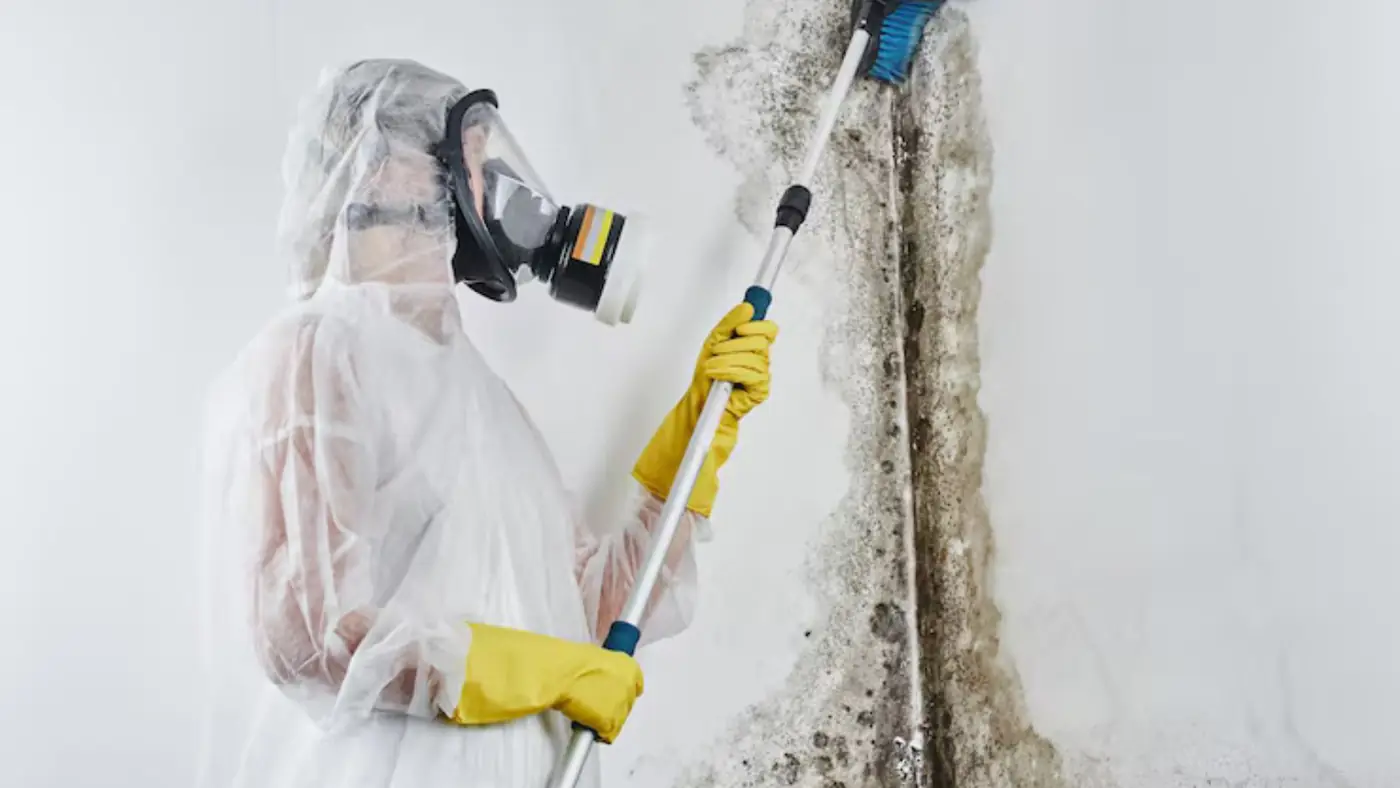
To clean mold in a Broomfield, CO home, fix the water source first, then scrub hard surfaces with detergent and water and dry them completely. The EPA says that if the moldy area is less than about 10 square feet, roughly a 3 ft by 3 ft patch, you can in most cases handle the job yourself. Larger growth, hidden growth and sewage are jobs for a professional.
Short answer
Small, visible patch on a hard surface: you can usually clean it. Larger than about 10 square feet, soaked materials, HVAC involvement or sewage: stop and call.
Stop the Water Before You Pick Up a Brush
The EPA's advice opens with the cause: fix plumbing leaks and other water problems as soon as possible, and dry all items completely. Cleaning a surface that is still being rewetted is wasted work. Find the leak, close the valve and let air move through the area.
If you cannot find the source, a moisture meter and thermal imaging can trace it. That is a separate step from cleaning, and it is often the one that decides whether the growth returns. We offer that tracing as part of our water mitigation work.
Protect Yourself First
Gloves
Use rubber or nitrile gloves that cover the wrist. Wash hands after you finish.
Eye protection
Goggles that seal around the eyes keep spores and splashes out, especially when working overhead.
Respiratory protection
Many people wear a fitted respirator when disturbing growth. Check the product label and ask a physician if you have a lung condition or allergy.
Ventilation and isolation
Open a window, use a fan that exhausts outside and close the door to the room. Keep the HVAC system off while you work.
The Cleaning Sequence for a Small Patch
Confirm the size
Measure the area. If it is less than about 10 square feet and the surface is firm, you are in the EPA's range for self-cleanup.
Scrub hard surfaces
Use detergent and water on tile, sealed wood, metal and similar surfaces. Rinse the cloth often and bag it.
Dry completely
Use a towel, then a fan. A surface that stays damp invites a repeat.
Discard porous items
Absorbent materials such as ceiling tiles and carpet may have to be thrown away if they become moldy. Bag them before you carry them through the house.
Hold off on paint and caulk
The EPA says not to paint or caulk moldy surfaces. Clean up the mold and dry the surface before painting.
Do not mix cleaning products, and read every label before use. Mixed chemicals can release harmful fumes, and detergent and water is the method the EPA names. After the clean, check the area again over the next few weeks.
Bigger than a 3 ft by 3 ft patch?
Call with a description. We explain scope and price before any work starts.
When DIY Is the Wrong Call
Some situations should not be handled with a bucket and a brush. In each one, the problem is more than a surface stain.
- The area is larger than about 10 square feet, or growth appears in several rooms.
- The water was sewage or drain backup. Stay out and call a professional.
- Growth is on or near ducts, vents or the air handler, where the system can move spores through the house.
- Drywall, insulation or subfloor is soft, which means it was wet well past the surface.
- You suspect growth inside a wall because of odor, but nothing is visible.
- Someone in the household has asthma, an allergy or a condition that weakens the immune system. The CDC says some groups react more strongly, so ask a physician before you start.
Water, wiring and gas
If water has reached outlets, panels, appliances or wiring, or you smell gas, do not start cleaning. Call 911 or the utility for electrical or gas risk before calling the restoration line.
What Professional Removal Involves
Professional work begins with containment. Barriers seal the room, negative air machines pull air out of the work area and HEPA air filtration captures fine particles. Wet or grown materials are cut out and bagged, hard surfaces are cleaned and the cavity is dried with air movers and LGR dehumidifiers.
The published standard is ANSI/IICRC S520, with conditions 1 to 3, and you may ask any company whether its crews work to it. Mold testing does not replace fixing moisture, and a clean test says little if the wall is still wet. Our mold remediation page explains how we scope the work.
Broomfield note: permits at the rebuild stage
Replacing moldy drywall is the sort of repair the city's Building Division wants to hear about. Contact the division before the rebuild and ask what your job needs, since we cannot decide that for the city.
Keep your before and after photos with the permit paperwork. They give a record of what was removed and when.
After the Cleanup: What to Check Next
Give the area a week of dry air and then look again. A surface that stays clean, feels dry and has no odor is a good sign. A stain that creeps back or a smell that lingers points to moisture you have not found yet.
- Run a fan or dehumidifier in the room until the surface feels dry to the touch.
- Recheck the spot after the next shower, rain or snowmelt, depending on where it was.
- Look at the back side of the wall or the space above the ceiling if you can reach it safely.
- Call for a moisture reading if anything feels cool or damp, since a meter sees what fingers cannot.
Do not seal the area with paint or caulk until you are confident it is dry. Paint holds moisture in as well as it hides stains. If you plan to repaint, wait for a dry reading and clean surfaces first.
Insurance and Paperwork
Insurers often draw a line between a burst pipe and a slow drip, and mold coverage varies by policy. Ask your insurer what applies, request a copy of the policy if you do not have one and keep your records.
We work in Louisville, Lafayette and the rest of the nearby area as well as our home ZIPs. If the growth followed a larger leak, water damage repair covers the rebuild.
The EPA says that if the moldy area is less than about 10 square feet, in most cases you can handle the job yourself. That is roughly a 3 ft by 3 ft patch. Larger growth or significant water damage calls for remediation guidance for bigger buildings.
The EPA says to scrub mold off hard surfaces with detergent and water and to dry completely. It does not name other products on that page. Read any label you use and never mix cleaners.
The EPA says absorbent or porous materials, such as ceiling tiles and carpet, may have to be thrown away if they become moldy. Bag them before moving them. Ask your insurer before discarding anything tied to a claim, and photograph it first.
Drywall repair is on the city's list of work that needs a permit. Ask the Building Division before the rebuild starts and let it tell you what your scope requires.
Only if the moisture is also fixed. Cleaning removes the growth you can reach, while drying and repair stop the conditions that let it grow. If it returns, look for a hidden leak.
Water or mold in your home right now?
Call the 24/7 line and describe what you see. We explain scope and price before work starts.