
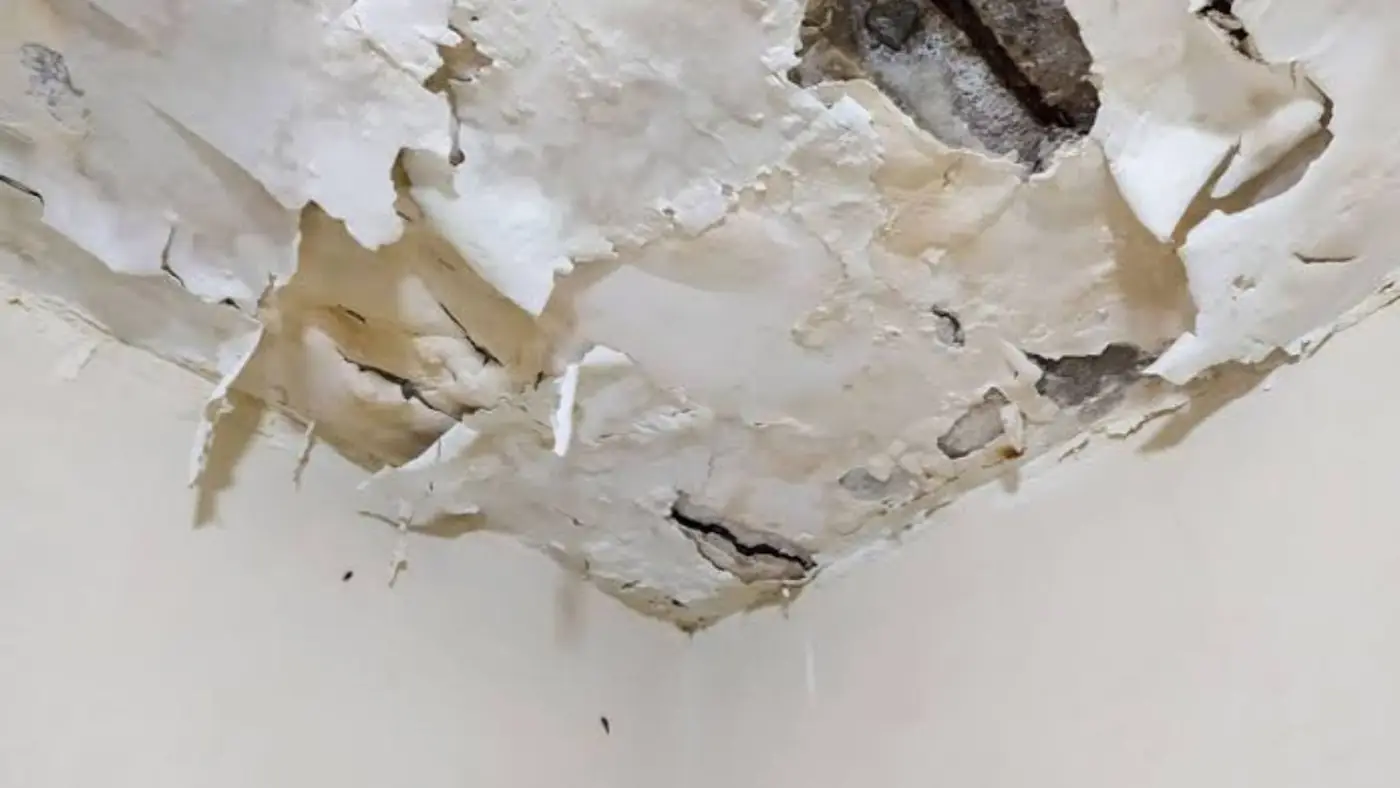
Ceiling water damage repair in Broomfield, CO is the work of finding the leak, drying what got wet, removing what cannot be saved and rebuilding the ceiling so the patch disappears. A stain is only the visible end of the problem. The repair order decides whether the stain stays gone.
Short answer
Repair the ceiling only after the source is stopped and the materials above it read dry.
- Small, dry, flat stains often need only sealing and paint.
- Soft, sagging or bubbled drywall is usually cut out.
- Wet insulation above the ceiling is usually replaced.
The Repair Sequence From Leak to Paint
Find and stop the source
A leak from a bathroom above, a roof opening, a supply line or an air conditioner condensate line must be fixed by the right trade. Plumbing and roofing belong to other trades, so a plumber or roofer handles the cause.
Make the area safe
If the ceiling sags, keep people out from under it. If a light fixture is wet, turn off the power at the panel only if you can reach it dry, and call an electrician.
Measure and dry
Moisture meters and thermal imaging show how far the water traveled. Air movers and LGR dehumidifiers dry the cavity once the wet drywall is opened.
Cut out and replace insulation
Wet drywall is cut back to dry framing, and wet insulation above it is removed so it cannot hold water against new board.
Hang, tape and finish
New drywall goes in, seams are taped and finished, and the surface is sanded smooth. Texture is matched to the surrounding ceiling.
Prime and paint
Stain-blocking primer seals the patch. Paint goes edge to edge so the repair does not show as a square.
What the Symptom Tells You About Scope
No stain is a perfect predictor, but certain symptoms point toward certain work. Use the table as a rough guide. Moisture readings decide the final scope.
| Symptom | Likely scope |
|---|---|
| Light tan ring, firm and dry to the touch | Fix the source, confirm dry readings, seal, prime and paint the area |
| Bubbled or peeling paint, slightly soft board | Dry and likely replace the affected drywall, then finish and paint |
| Sagging or bowed ceiling | Treat as urgent. Remove the wet drywall and insulation, dry the cavity, then rebuild |
| Dark spots, musty odor | Check for hidden moisture and growth. Remove wet porous material and dry before repair |
| Recurring stain in the same spot | Look again for the source before any patch. Further drying may be needed |
Readings and an opened ceiling confirm what the surface suggests.
Why Cutting Out Early Is Safer
Wet drywall loses strength. A ceiling panel that has absorbed water can pull away from the fasteners, crack at the seams or sag under its own weight. Cutting it out early is safer than waiting for it to fall.
Insulation matters too. Fiberglass that stays wet holds moisture against new drywall and can set up the next problem above the patch. If wet insulation is left in place, even a flawless paint job hides the issue only for a while.
Texture, Access and Matching the Finish
Matching a ceiling is often the hardest part of the job. Knockdown, orange peel and smooth finishes each need a different technique, and a patch that is flat while the ceiling around it is textured will catch the light and show. Painters usually feather the texture beyond the repair and paint the whole ceiling plane to the nearest corner.
Access matters as well. When the leak is from an upstairs bathroom, the floor above may need attention before the ceiling does. A wet subfloor, a failed wax ring or a tub drain that needs a plumber should be sorted out first, or the new drywall will end up wet in a few months.
Ask your contractor to show you the opened cavity before it is closed. A photo of dry framing and clean insulation is useful for your own records and for any later buyer or insurer who asks what was done.
Small Stain, Large Stain, Whole Room
Small, dry stain
Seal the spot, prime and paint. Confirm with a meter before you call it finished.
One damaged panel area
Cut out the wet section back to framing and replace insulation. Tape, finish and paint the plane.
Whole-room ceiling
More drywall is removed and drying takes longer. Painting the full ceiling hides the seams.
Multiple floors affected
The wet path may continue through walls below. Moisture mapping shows how far the water went.
Stain or sag overhead?
Call and describe what you see. We explain scope and price before work starts.
What Not to Skip
- Do not paint over a wet stain. Dry it and fix the cause first.
- Do not skip the primer. Plain paint over a stain often lets it show through again.
- Do not close the ceiling until the cavity above it reads dry.
- Do not assume the visible stain is the full size of the wet area.
A ceiling repair is also a chance to look at what else the water touched. Check the walls below the stain, light fixtures, bath fans and the attic or floor space above. A short walk with a flashlight after the cause is fixed often finds a second damp spot before it becomes a second repair.
EPA guidance for moldy homes boils down to two habits: repair the leak promptly and get everything dry before any finish goes on. Those habits prevent most ceiling repair mistakes.
Broomfield note: permits and the age of your house
New drywall is the kind of work the city regulates, so the Building Division is worth a call before the rebuild starts. Ask whether your ceiling job needs a permit.
City history dates Broomfield Heights to 1955 and the Anthem, Anthem Highlands and Arista developments to 2001 through 2012. Homes of different ages tend to fail in different typical places, so a leak above a ceiling may start at very different spots. A plumber or inspector can tell what your specific house has, so have the source checked before you patch.
Insurance, Records and Mold Risk
A burst line is more often covered than a slow seep, which insurers tend to treat as gradual damage or neglect. Photograph the stain before work starts and keep readings and receipts. Check your policy and ask your insurer before repairs begin.
If the ceiling has been wet for a while, the CDC notes that mold grows on damp cellulose materials such as drywall and paper and needs ongoing moisture. Our mold remediation service handles containment and cleanup when growth is present. For health questions, ask your physician.
Where We Work
Our water damage repair team handles ceiling patches across ZIPs 80020, 80021 and 80023. We also respond to calls in Westminster and Lafayette. For emergency drying before the rebuild, see our water mitigation page.
Not until the source is fixed and the area reads dry. Painting over a damp stain traps moisture and the mark often returns. Use stain-blocking primer after drying.
Soft, sagging, bubbled or crumbling drywall usually needs to be cut out. A moisture meter checks board that looks fine. A firm, dry, lightly stained ceiling may only need sealing and paint.
Ceiling drywall work is something the city's Building Division reviews. Ask it before the rebuild so the plan matches what the city needs.
A plumber or roofer fixes the source. We do not plumb, and we do not waterproof basements. We handle drying, removal and repair once the water has stopped.
Yes, treat it as one. Keep people out from under it, and if water is near electrical fixtures, the utility or 911 is the first call. Then call us to remove the wet material.
Water or mold in your home right now?
Call the 24/7 line and describe what you see. We explain scope and price before work starts.